If You Developed Ovarian Cancer After Years of Talcum Powder Use
For decades, talcum powder was marketed and used as an everyday personal-care product.
Many women used talcum powder or baby powder for feminine hygiene without being warned that questions had been raised about whether genital use of talc could be associated with ovarian cancer.
Today, scientific research continues to examine the potential relationship between talc exposure and ovarian cancer. The U.S. Food and Drug Administration acknowledges that studies dating back decades have suggested a possible association between genital use of talc-containing powders and ovarian cancer, although the evidence has not conclusively established whether talc causes ovarian cancer.
If you or a loved one developed ovarian cancer after years of using talcum powder, the circumstances deserve careful investigation.
Diez-Arguelles & Tejedor represents individuals and families investigating potential claims involving dangerous and defective products.
Call (407) 705-2880 for a confidential consultation.
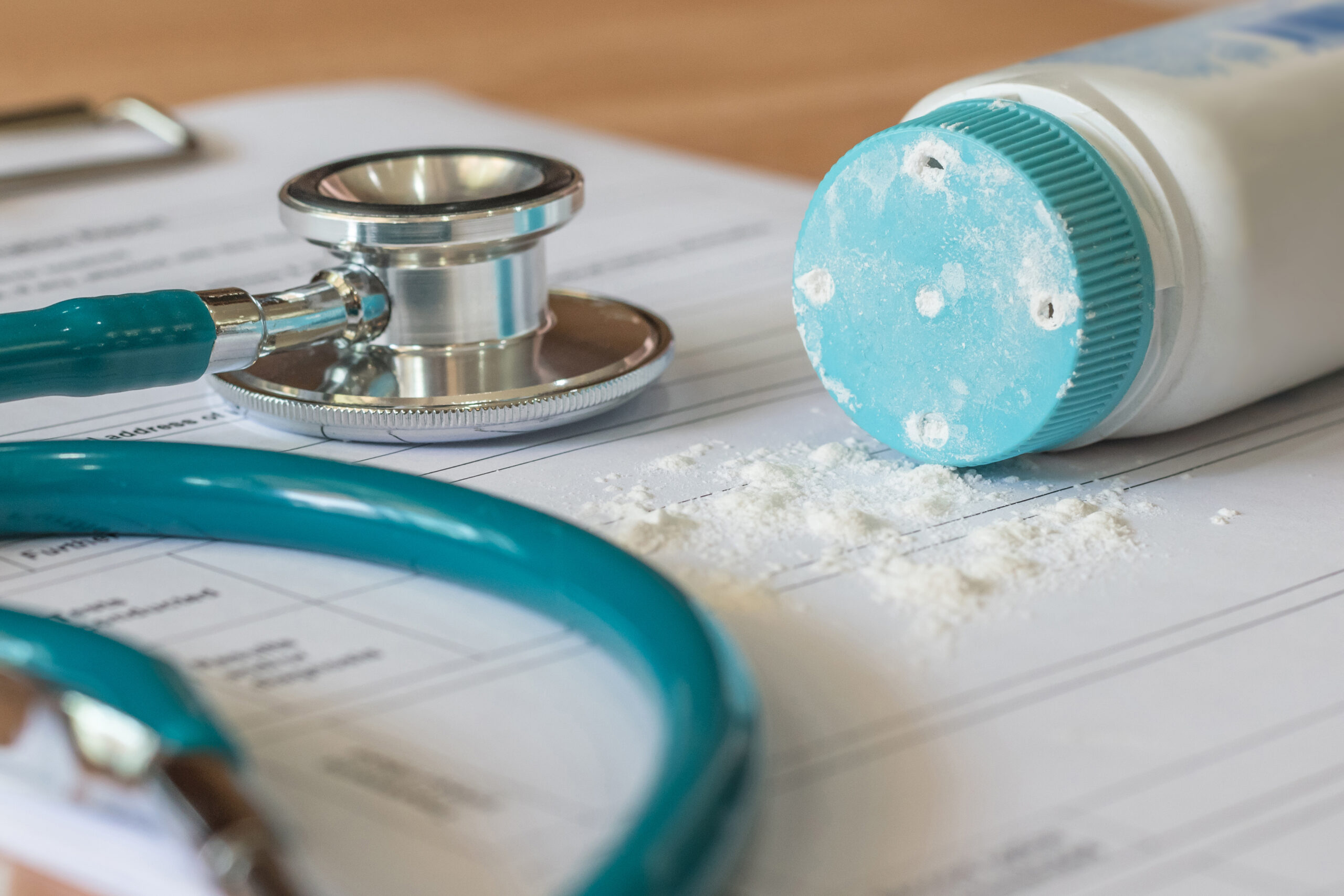
Diez-Arguelles Tejedor stands up for women and families affected by ovarian cancer and potential exposure to talcum powder products. Our attorneys are committed to investigating the circumstances surrounding your exposure and diagnosis, protecting your rights, and helping you pursue the compensation you may be entitled to under the law.
Call (407) 705-2880 to learn how we can help.
Why Is Talcum Powder Being Investigated?
Talc is a naturally occurring mineral that has been used in cosmetic and personal-care products because it absorbs moisture and reduces friction.
The concern surrounding talcum powder and cancer involves two related issues.
First, researchers have studied whether talc used in the genital area can be associated with an increased risk of ovarian cancer.
Second, some talc deposits can occur naturally near asbestos deposits. Asbestos is a known carcinogen, and the potential for asbestos contamination of talc-containing cosmetic products has been a longstanding regulatory concern. The FDA continues to monitor talc-containing cosmetics for asbestos contamination.
These issues are not identical. A potential ovarian cancer claim based on talc exposure may involve different scientific and legal questions than an asbestos-related cancer claim.
What Does the Research Say About Talc and Ovarian Cancer?
The scientific evidence surrounding talcum powder and ovarian cancer is complicated.
Some observational studies have reported an association between genital talc use and ovarian cancer, while other studies have not found a clear association. The National Cancer Institute currently states that studies have not found clear evidence of an increased risk of ovarian cancer from talc use in the perineal area.
The FDA likewise states that published studies have suggested a possible association but have not conclusively demonstrated a link or established what risk factors might be involved.
For that reason, a potential legal claim requires more than simply showing that someone used talcum powder and later developed ovarian cancer.
The medical history, duration and nature of exposure, pathology, scientific evidence, product information, and other circumstances may all be important.

Products That May Contain Talc
Talc has been used in a wide range of personal-care and cosmetic products.
Depending on the time period and formulation, products may include:
- Baby powder
- Body powder
- Feminine hygiene powders
- Cosmetic powders
- Face powders
- Other talc-containing personal-care products
One of the most widely known products associated with talc litigation is Johnson's Baby Powder. Johnson & Johnson also marketed Shower to Shower, another talc-containing product that has been the subject of litigation.
The products involved in a potential claim depend on what was used, when it was used, and the formulation of the product at the time.
What Does a Talcum Powder Case Involve?
A potential product liability claim generally requires an investigation into more than the existence of a cancer diagnosis.
Depending on the circumstances, an investigation may examine:
Product identification
What talcum powder or cosmetic products were used?
Exposure history
How frequently and for how many years were the products used?
Medical history
When was the cancer diagnosed, and what type of cancer was involved?
Pathology
What does the available pathology show?
Other potential causes and risk factors
What other medical or environmental factors may need to be considered?
Scientific evidence
What research and expert evidence may support or challenge the alleged relationship between the product and the cancer?
Manufacturer knowledge and warnings
What did the manufacturer know about potential risks, and what warnings were provided to consumers?
A product liability case can require extensive medical, scientific, and corporate evidence.
Ovarian Cancer Can Have Life-Changing Consequences
Ovarian cancer can require extensive medical treatment and can affect nearly every part of a person's life. Treatment may involve surgery, chemotherapy, radiation, targeted therapies, or other medical care depending on the type and stage of the cancer.
The consequences can include:
- Significant medical expenses
- Lost income
- Reduced ability to work
- Pain and physical limitations
- Emotional distress
- Changes to family life
- Long-term medical treatment
- Permanent health consequences
For families who lose a loved one, the consequences can be even greater.
If a potential product liability claim contributed to a person's illness or death, the legal rights of the injured person and surviving family members should be evaluated based on the circumstances.
What If a Loved One Died From Ovarian Cancer?
A potential talcum powder claim does not necessarily end when the person who used the product dies. Depending on the circumstances, surviving family members or the estate may have legal rights arising from the person's illness or death.
These cases can require evidence concerning the person's product use, medical history, diagnosis, treatment, and cause of death. A death certificate, pathology records, medical records, and other documentation may be important when evaluating the claim.
Understanding Your Options After Talcum Powder Exposure
You may have used talcum powder for years without ever considering whether there could be a connection between that use and your health.
After an ovarian cancer diagnosis, you may now be wondering whether the products you used could be relevant to your condition. If you lost someone you love to ovarian cancer, you may also be looking for answers about whether years of talcum powder use should be investigated.
There may not be an immediate answer. These cases require a careful review of your medical history, product use, scientific evidence, and individual circumstances.
Diez-Arguelles & Tejedor can review the circumstances of your case and help you understand whether the evidence may support a potential legal claim.
If you or a loved one developed ovarian cancer after using talcum powder products, call Diez-Arguelles Tejedor at (407) 705-2880 for a confidential consultation.
Serving injured individuals and families throughout Orlando and across Florida. Call Diez-Arguelles & Tejedor at 1-888-888-3773 to discuss your legal options in a free consultation.
Frequently Asked Questions
The scientific evidence is not conclusive. Some studies have suggested a possible association between genital use of talc-containing powders and ovarian cancer, while other research has not found a clear increased risk. The FDA states that more research is needed.
Get Free Advice! Send us a Message Now.
You pay Absolutely Nothing Unless We Win your Case